Decision Fatigue May Not Exist. A Huge New Study Says So

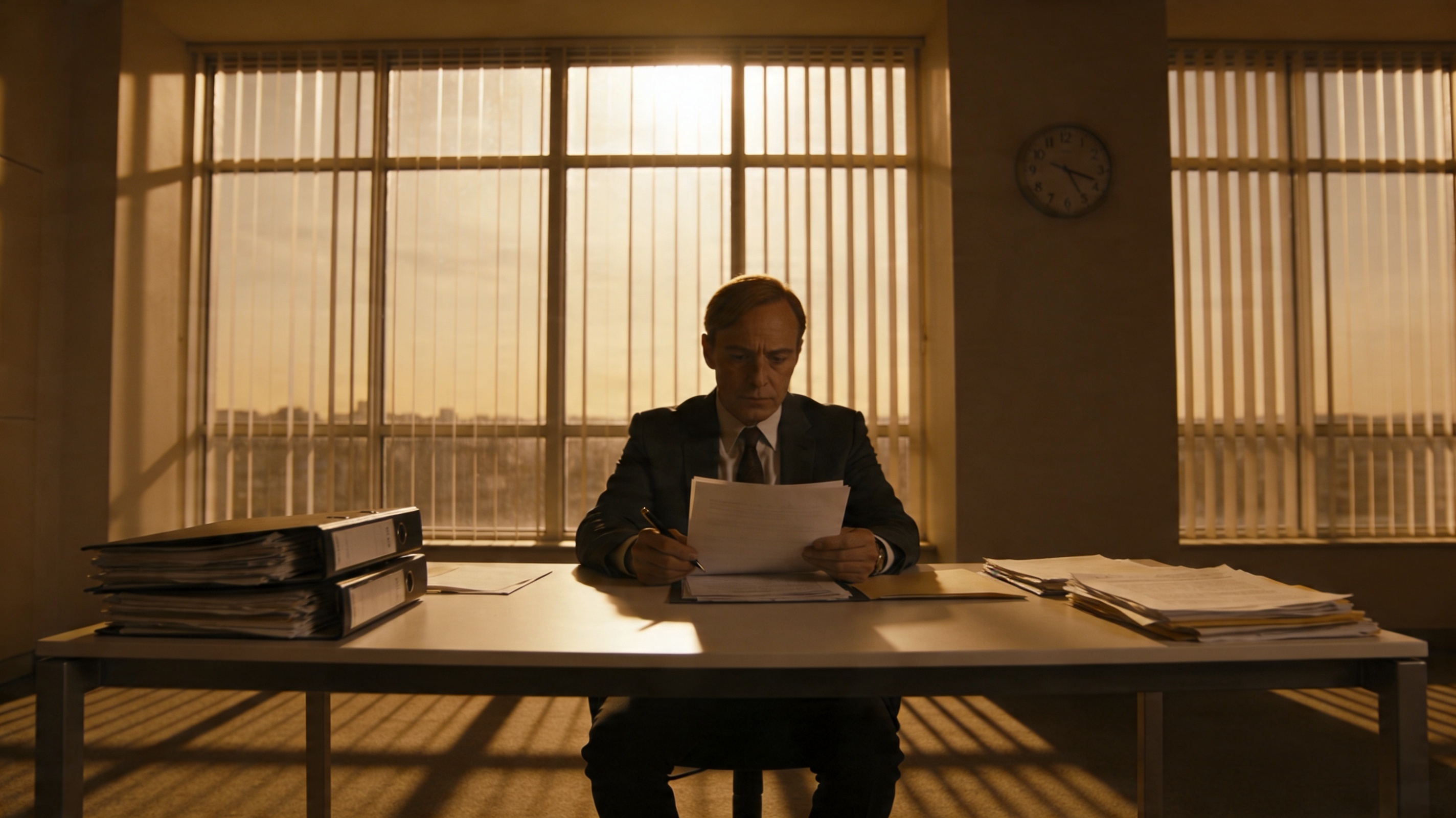
Decision fatigue is the idea that every choice you make during the day chips away at your mental resources, leaving you cognitively depleted and prone to bad judgment by afternoon. Executives schedule important calls before noon because of it. Advice columnists recommend eating the same breakfast every day to preserve mental energy. Barack Obama famously wore only grey or blue suits to stop wasting decisions on clothes. It became conventional wisdom in business. A major 2025 study, using 231,076 real-world decisions, just found no evidence it's real.
The Concept That Took Over Business Culture
Decision fatigue entered the mainstream largely because of a 2011 study on Israeli judges. Researchers analyzed parole decisions and found that prisoners seen early in the day, or just after a food break, were far more likely to be granted parole — prisoners seen near the end of a session had roughly a 20% chance, while those seen just after a break had nearly a 65% chance. The interpretation spread fast: even trained legal professionals made worse, lazier decisions when mentally depleted. This finding became one of the most cited in behavioral economics, spawning books, podcasts, and a wave of productivity advice telling people to protect their morning brainpower at all costs.
The Problem With That Evidence
The core issue with most decision fatigue research, including the judge study, is how the data was collected. Researchers typically examined existing records retrospectively, searching for patterns that fit the fatigue story after the fact, with no preregistration, meaning they could choose which patterns to report after seeing the data. "Fatigue" was usually operationalized as time of day, which confounds tiredness with dozens of other variables, including what types of cases tend to be scheduled when. As Andersson and colleagues note in their 2025 paper, the direction of predicted effects in this literature was "seldom ex-ante obvious but seems easy to rationalize ex-post." In plain language: if you already believe in decision fatigue, you can find it almost anywhere in noisy sequential data.
What 231,000 Decisions Actually Showed
Andersson, Lindberg, Tinghög, and Persson (2025) set out to test this properly. They analyzed 231,076 medical judgments made by 174 specialized nurses at 1177 Direct, Sweden's national telephone triage service, across two full autumn seasons. This was a Registered Report, meaning the design and hypotheses were locked in and publicly time-stamped before the researchers touched any new data. The setting was near-ideal for catching decision fatigue: nurses handled back-to-back patient calls all day, rating urgency under real pressure, with an average of less than five minutes between cases.
The researchers built two smart comparison points. They compared nurses who were six-plus hours into their morning shift against nurses on the afternoon shift who had just started, both handling calls from the same patient pool at the same time of day. They also compared judgment quality right before and right after breaks during intense call sequences. In both cases, the Bayesian statistical tests consistently returned support for the null hypothesis, with Bayes Factors above 22 across all main tests. Nurses did not assign higher urgency ratings when tired, did not lean more on personal defaults when depleted, and their judgment did not change in the way decision fatigue predicts.
Why the Popular Story Survived Anyway
The researchers are careful not to claim fatigue has no effect whatsoever on people. Mental effort is real, long shifts are exhausting, and a weaker or more context-specific version of decision fatigue may exist in narrow domains. What the data challenge is the idea that decision fatigue is a robust, domain-general effect, the kind that justifies rearranging your entire schedule around preserving morning cognitive reserves. The concept spread not because the original evidence was strong, but because the narrative was compelling — a study of judges, an intuitive mechanism, a memorable result. Nobody ran rigorous pre-registered tests to question it until now.
What to Do With This
Stop using decision fatigue as your default explanation for poor choices made later in the day. If you make a bad call at 4pm, the cause is more likely to be stress, unclear information, or competing priorities, not a fundamental depletion of decision-making capacity. The fix for those problems looks quite different from the fix for an exhausted prefrontal cortex.
The one concrete change worth making: if you've been treating afternoons as cognitively damaged territory and protecting mornings exclusively for important decisions, you can ease off. Schedule high-stakes thinking when you personally feel sharpest, based on your own energy rhythms, not on the assumption that afternoon brains are inherently worse. Take breaks when you feel tired, work on hard problems when you feel sharp. The science no longer requires anything more complicated than that.
If a single study of judges convinced millions of professionals to redesign their schedules around a concept that 231,000 pre-registered cases can't confirm, it's worth asking what else in the business productivity canon is running on similarly thin evidence.
References
Andersson, D., Lindberg, M., Tinghög, G., & Persson, E. (2025). No evidence for decision fatigue using large-scale field data from healthcare. Communications Psychology, 3, 33. https://doi.org/10.1038/s44271-025-00207-8
Share this post
Related Posts

Your Calendar Is Killing Your Best Work, and the Data Proves It
A study of 211,000 workers found scheduling behavior almost never matches scheduling preferences. Here's what that gap is actually costing you.

Positive Thinking at Work Is Sabotaging Your Goals, Science Shows
Visualizing success actually lowers your motivation. Research reveals the 4-step mental method that beats positive thinking every time.
Why You're Losing 40% of Your Productivity Without Knowing It (And How New Science Shows You Can Get It All Back)
Discover how new science-backed habits can help you reclaim focus, save time, and get more done each day without working longer hours.