Forget 8 Hours: Your Sleep Schedule Matters More Than Duration

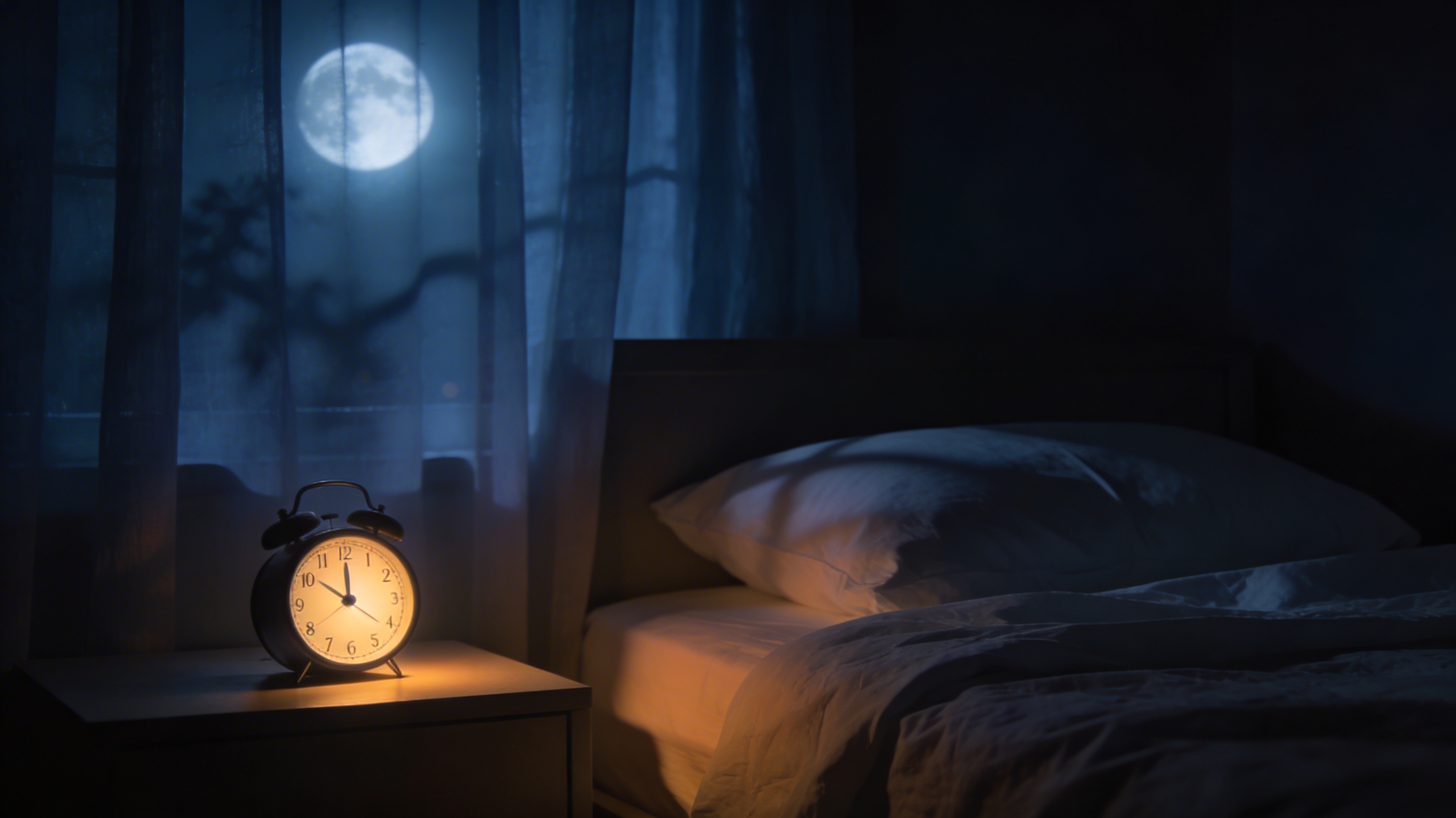
You've been told to get seven to nine hours of sleep. That advice isn't wrong. It just might be the least important part of the equation.
The Study That Reframes Everything
A 2023 prospective cohort study published in the journal Sleep analyzed over 10 million hours of accelerometer data from 60,977 adults in the UK Biobank and reached a conclusion that challenges decades of sleep health messaging: the day-to-day consistency of your sleep-wake timing is a stronger predictor of premature death than how many hours you actually sleep (Windred et al., 2023). Most public health campaigns, fitness trackers, and doctor's advice have pointed squarely at duration. Get your eight hours. The research says that's not the whole story.
The researchers measured something called the Sleep Regularity Index, a metric that scores how similar your sleep-wake patterns are from one night to the next. Across more than 60,000 participants tracked for an average of six years, the finding was stark. People in the most regular sleep quintile had a 20% to 48% lower risk of all-cause mortality compared to those with the least consistent schedules, with cardiometabolic mortality risk dropping by up to 57% in the most regular group.
When researchers ran competing statistical models to see which factor, regularity or duration, better predicted who died over the follow-up period, sleep regularity won. Adding duration to a model already containing the regularity score didn't explain any meaningful additional variance in mortality. The hours matter, yes. But the schedule is doing more of the heavy lifting.
Why Your Body Cares About the Clock
Every cell in your body runs on a roughly 24-hour internal clock, and those clocks are kept in sync by consistent timing cues, primarily light and the timing of sleep itself. When you go to bed and wake at the same time each day, those rhythms stay coordinated. When you sleep at midnight on weekdays and 3am on weekends, the whole system drifts. Hormonal release, immune signaling, cellular repair, and metabolic function all run on clockwork timing, and when the clock is disrupted, those processes run late, early, or not at all.
Think of it like a factory where every machine is set to a different shift schedule. The parts might all be functional, but the line stops working because nothing arrives at the right moment.
The Weekend Lie We Tell Ourselves
This matters most for people who treat the weekend as a biological debt repayment plan. Sleeping in for three or four extra hours on Saturday feels rational if the week was short, but the body doesn't process it that way. It reads the shift in wake time as a signal that the time zone has changed. Researchers call this social jetlag, the chronic mismatch between your biological clock and your social schedule, and the evidence linking it to cardiometabolic risk, obesity, and metabolic dysfunction has grown steadily. The Windred et al. findings add mortality to that list.
What To Actually Do About It
The most effective single intervention is picking a wake time and holding it seven days a week, including weekends. Your wake time acts as a circadian anchor, and keeping the alarm consistent prevents the progressive clock drift that builds across an irregular week. A 30-minute variation is fine. A three-hour swing is not.
If you're genuinely sleep-deprived, repay the debt by going to bed 30 minutes earlier across several nights rather than collapsing into a 10-hour Saturday sleep. The hours still accumulate, but your circadian rhythms never lose their footing. Over 60,000 people wore wrist accelerometers so researchers could figure out what the data actually says about sleep and survival. The answer wasn't more hours. It was the same hours, every single night.
References
Windred, D. P., Burns, A. C., Lane, J. M., Saxena, R., Rutter, M. K., Cain, S. W., & Phillips, A. J. K. (2023). Sleep regularity is a stronger predictor of mortality risk than sleep duration: A prospective cohort study. Sleep, 47(1), zsad253. https://doi.org/10.1093/sleep/zsad253
Share this post
Related Posts

The Best Time to Eat May Matter More Than What You Eat
A 2024 meta-analysis reveals time-restricted eating cuts cholesterol and blood pressure, but only if the window is timed right. Here's what the science says.

Strength Training Alone Won't Protect Your Heart, Study Finds
A year-long RCT of 406 adults found resistance training alone didn't improve heart health markers. Here's what exercise actually protects your heart.

Exercise Beats Antidepressants for Depression: New BMJ Study
BMJ 2024 study shows exercise works as well as meds for depression, with fewer side effects. Discover the best workouts that rival pills.