You Sleep More Than Your Ancestors Did. So Why Are You Exhausted?

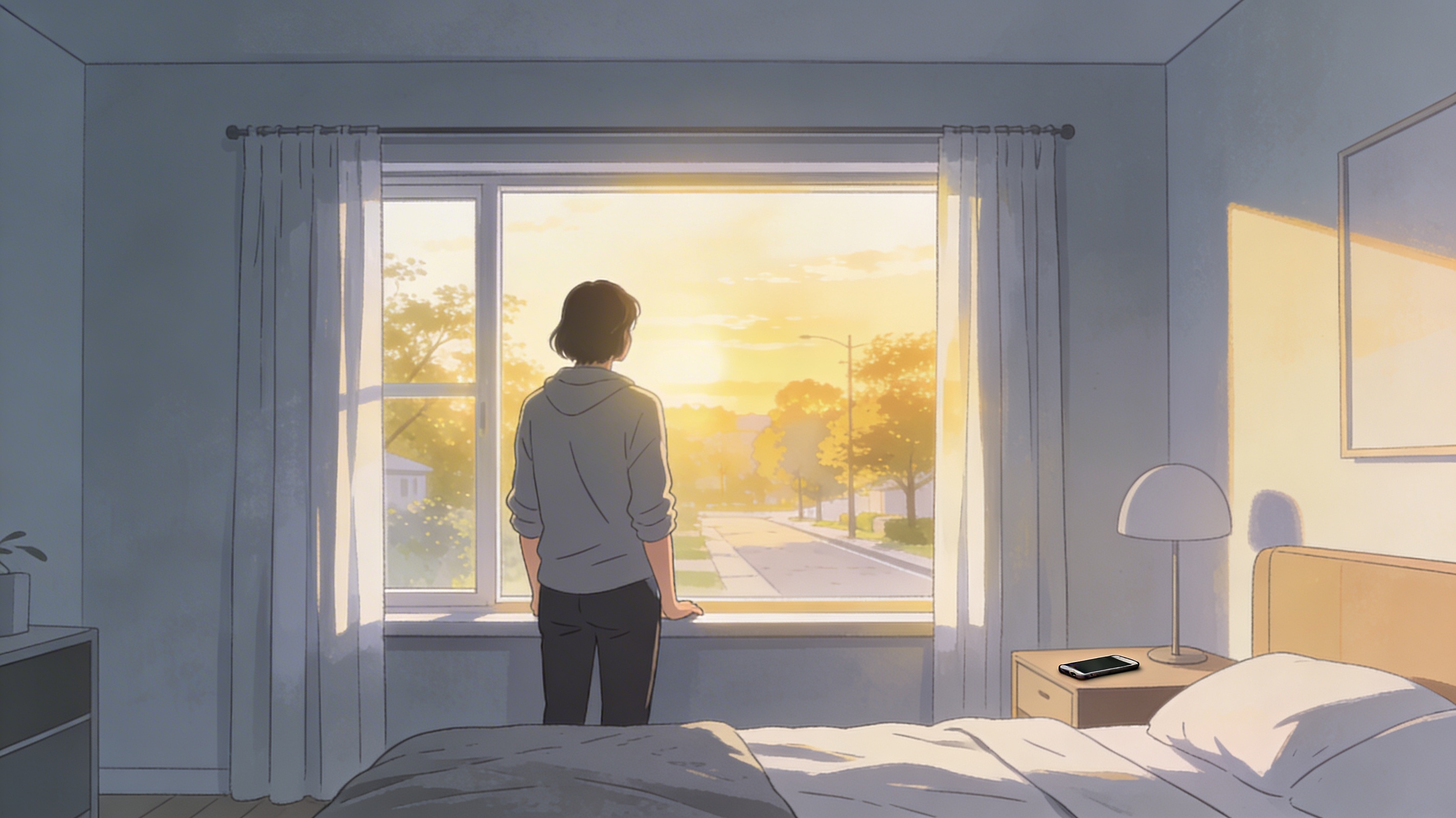
You sleep more than your ancestors did. Not a little more. A 2025 study published in Proceedings of the Royal Society B analyzed 54 global populations and found that people in industrial societies sleep approximately 45 minutes longer per night than people living in non-industrial, off-the-grid societies, and they sleep far more efficiently. The sleep epidemic is real, but it's not what most people think it is.
The Sleep Epidemic That Isn't
Researchers at the University of Toronto Mississauga, led by anthropologist David Samson, compiled sleep data from 54 populations across 21 countries. They used wrist actigraphy and polysomnography to measure both sleep duration and sleep efficiency, the percentage of time in bed actually spent sleeping. Industrial societies averaged 7.1 hours per night with a sleep efficiency of 87.9%. Non-industrial societies averaged 6.4 hours with an efficiency of just 73.9%.
That is a 45-minute gap in duration and a 14-point gap in efficiency, in the opposite direction to what the sleep epidemic narrative keeps insisting. Hunter-gatherers like the Hadza of Tanzania sleep just 6.2 hours a night. The Himba of Namibia average 5.47 hours per night. Your average office worker in London or Toronto actually gets more sleep than either of them. The evidence is hard to argue with: modern life has not shortened our sleep. Something else is going wrong.
Your Circadian Rhythm Is Broken
Here is where the research gets uncomfortable. The same study also measured circadian function, the consistency and robustness of the 24-hour body clock. On that measure, industrial societies score significantly lower than non-industrial ones. Non-industrial populations had a circadian function index of 0.70. Industrial populations scored 0.63, and every single posterior sample in the Bayesian analysis pointed the same way: living in an industrial society is strongly associated with a weaker circadian rhythm.
You are sleeping longer and sleeping efficiently. But your body clock is running ragged.
The reason comes down to what regulates circadian rhythms in the first place: light. Non-industrial people living off the grid spend their days outside. They get intense natural sunlight at dawn, natural temperature drops at dusk, and genuine darkness at night. Their bodies have a very clear signal for what time it is. Your body does not. You work under similar artificial lighting at 9 a.m. and 4 p.m. You eat at irregular hours. You look at a screen at 10 p.m. that tells your brain it is still midday. Your sleep environment is climate-controlled and light-sealed. All of this is comfortable, and your circadian system, calibrated by millions of years of outdoor living, is receiving almost no meaningful information about the actual time of day.
Why This Matters More Than You Think
Weak circadian rhythms are not a minor inconvenience. The Samson and McKinnon paper links dampened circadian function to an unsettling range of health outcomes: depression, fatigue, obesity, dementia, cardiovascular disease, increased inflammation, and elevated mortality risk. The authors describe this pattern as evolutionary mismatch, where the comfort and security of modern life inadvertently strips away the biological cues that keep your internal clock accurate.
This mismatch is separate from sleep deprivation, and that distinction matters. You can sleep eight hours in a perfectly dark, climate-controlled room and still have a dysregulated circadian system. Sleep duration and circadian alignment are two different things, and the research suggests we have been obsessing over the former while largely ignoring the latter.
What You Can Actually Do
The most evidence-consistent change is getting bright natural light into your eyes within the first hour of waking. This is the single strongest circadian entrainment signal your body responds to, and it costs nothing. Go outside before you open your laptop. Even on an overcast morning, outdoor light is dramatically brighter than indoor artificial light, which means your circadian system reads it as a real signal about time of day.
The second move is to reintroduce natural variation into your day. Eating meals at consistent times, spending part of the middle of the day outdoors, and dimming your home lighting in the two hours before bed all help reinforce the rhythm your body is built to track. Temperature matters too. Letting your bedroom get slightly cooler at night gives your body another reliable time cue.
You almost certainly do not need more sleep. What you more likely need is a sharper biological signal for when the day begins, when it peaks, and when it ends.
If your body genuinely cannot tell the difference between a Tuesday afternoon and a Tuesday at midnight, it is worth asking: what else might that confusion be quietly disrupting?
Samson, D. R., & McKinnon, L. (2025). Are humans facing a sleep epidemic or enlightenment? Large-scale, industrial societies exhibit long, efficient sleep yet weak circadian function. Proceedings of the Royal Society B, 292(2041), 20242319. https://doi.org/10.1098/rspb.2024.2319
Share this post
Related Posts

The Best Time to Eat May Matter More Than What You Eat
A 2024 meta-analysis reveals time-restricted eating cuts cholesterol and blood pressure, but only if the window is timed right. Here's what the science says.

Strength Training Alone Won't Protect Your Heart, Study Finds
A year-long RCT of 406 adults found resistance training alone didn't improve heart health markers. Here's what exercise actually protects your heart.

Exercise Beats Antidepressants for Depression: New BMJ Study
BMJ 2024 study shows exercise works as well as meds for depression, with fewer side effects. Discover the best workouts that rival pills.