Stop Reaching for Your Phone After Studying. Science Says Wait.

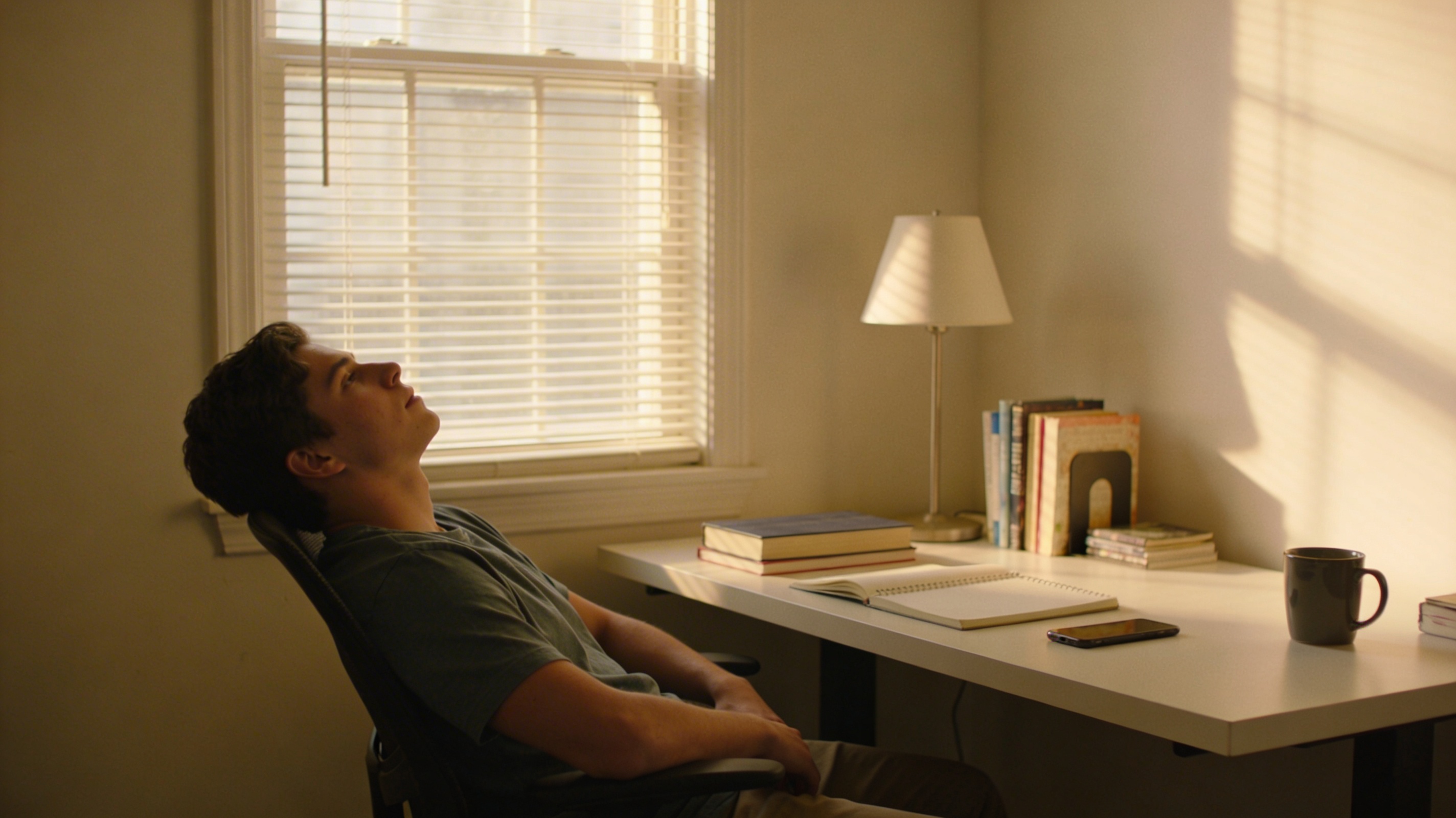
The single most damaging thing most people do right after studying is reach for their phone. Not because phones are inherently bad for the brain, but because of what happens in the ten minutes immediately after learning something new.
Your Brain Is Still Working When You Stop
When you finish reading a chapter, close a revision notebook, or walk out of a lecture, your brain has not finished processing what it just took in. The neurons encoding that new information are still firing, replaying recent experiences, and doing the slow work of transforming fragile short-term traces into stable long-term memories. This process is called memory consolidation, and for decades researchers assumed it required sleep to happen properly.
Recent science tells a more surprising story. A 2025 systematic review and meta-analysis published in Psychonomic Bulletin & Review, pooling data from dozens of controlled experiments, confirmed that brief periods of quiet wakeful rest immediately after learning significantly improve long-term memory retention compared to engaging in any other mental activity. You do not need to be asleep. You just need to stop doing things.
Quiet Rest Works as Well as Sleep
The clearest controlled test of this came from a study published in Learning and Memory, which directly compared three groups: participants who slept after learning, those who quietly rested, and those who performed an unrelated cognitive task. Both sleep and quiet rest produced substantially better memory retention than the distractor task. More strikingly, the performance advantages from rest and sleep were statistically indistinguishable from each other for both declarative and procedural memory. Quiet rest worked as well as sleep, at least across short retention intervals.
A separate study published in Applied Cognitive Psychology tested a more realistic version of this question: what if, instead of resting, you used social media? Participants who scrolled for just eight minutes after learning a vocabulary list showed significantly worse recall both immediately and twenty-four hours later, compared to those who did nothing for the same eight minutes. The damage was not subtle. It was large and consistent across multiple test points.
Why the Brain Needs That Empty Window
The leading explanation is the interference protection hypothesis. When you encode new material, those memory traces are temporarily vulnerable. Anything mentally engaging you do immediately afterward competes for the same neural resources, overwriting or displacing what you just learned before it stabilises. Quiet rest removes that competition entirely. Your brain gets a clear runway to finish the job it started.
There is also growing evidence that awake memory reactivation plays an active role. A 2025 study using intracranial EEG recordings from patients found that during quiet wakefulness after learning, the brain spontaneously replays recently formed memory traces, accompanied by hippocampal ripple activity and hippocampal-cortical communication previously associated only with sleep. The rest is not passive. The brain is actively doing something during those quiet minutes. You are just not consciously aware it is happening.
The Cumulative Cost Most People Miss
Most people do not study in single isolated sessions. They cover a topic, immediately jump into a group chat, check their inbox, watch a short video, and then try to study again. Every one of those transitions potentially degrades what was just encoded before it can consolidate. Over a semester of lectures or a weeks-long revision period, the cumulative loss compounds quietly. The encouraging part is that most studies showing the rest benefit use windows of only ten to fifteen minutes. That is all it takes.
What to Do Before You Close Your Notes
Set a ten-minute timer at the end of your next study session and commit to doing nothing cognitively demanding when it goes off. Staring at the ceiling qualifies. A slow walk without headphones qualifies. Sitting with a drink and no screen qualifies. The key is low mental stimulation, not sleep or formal relaxation. You are not adding time to your schedule. You are changing how you spend the minutes you were already going to burn on something forgettable.
The harder question is not whether this works. The 2025 meta-analysis says it does, clearly. The harder question is whether knowing that ten minutes of nothing is measurably more valuable for your memory than ten minutes of scrolling is actually enough to make you choose it.
References
Cai, L., & Tempel, T. (2021). Effects of wakeful resting versus social media usage after learning on the retention of new memories. Applied Cognitive Psychology, 35(3), 756–763. https://doi.org/10.1002/acp.3641
Martínez-Vázquez, N., de Vega, M., & Moreno-Martínez, F. J. (2025). Effects of wakeful rest on memory consolidation: A systematic review and meta-analysis. Psychonomic Bulletin & Review. https://doi.org/10.3758/s13423-025-02665-x
Stickgold, R., et al. (2021). 'Sleep-dependent' memory consolidation? Brief periods of post-training rest and sleep provide an equivalent benefit for both declarative and procedural memory. Learning & Memory, 28(5), 151–159. https://doi.org/10.1101/lm.053330.120
Taillard, J., Micoulaud-Franchi, J. A., & Ruby, P. (2025). Awake reactivation of cortical memory traces predicts subsequent memory retrieval. Brain Stimulation. https://doi.org/10.1016/j.brs.2025.02.011
Share this post
Related Posts
Your Laptop Is Sabotaging Your Memory. A Brain Scan Proves It.
A 2024 NTNU study found handwriting creates far more brain connectivity than typing. Here's what it means for how you learn.
Stop Studying One Topic at a Time: Science Has a Better Way
Research shows mixing study topics beats focused practice, yet 78% of people choose wrong. Learn the interleaving method for better retention.
Why 93% of People Believe These Harmful Brain Myths
Think you know your brain? New research shows 93% believe fake neuroscience. Discover 7 myths experts still fall for, and protect your learning today.